The Precarious Oral Histories Project

The Precarious Oral Histories Project is led by oral historians in the Australian National University team of the Language Data Commons of Australia. In this blog post, Dr Alexandra Mountain writes about the importance of the project and it’s next exciting stage focused on NSW and the ACT.

Oral historian Steven High wrote in 2010 that “Oral historians have been so focussed on the making of the interview that we have spent remarkably little time thinking about what to do with the audio or video recordings once they are made.” (High, “Telling Stories”, 2010)
Now, 16 years later, High’s words still ring true.
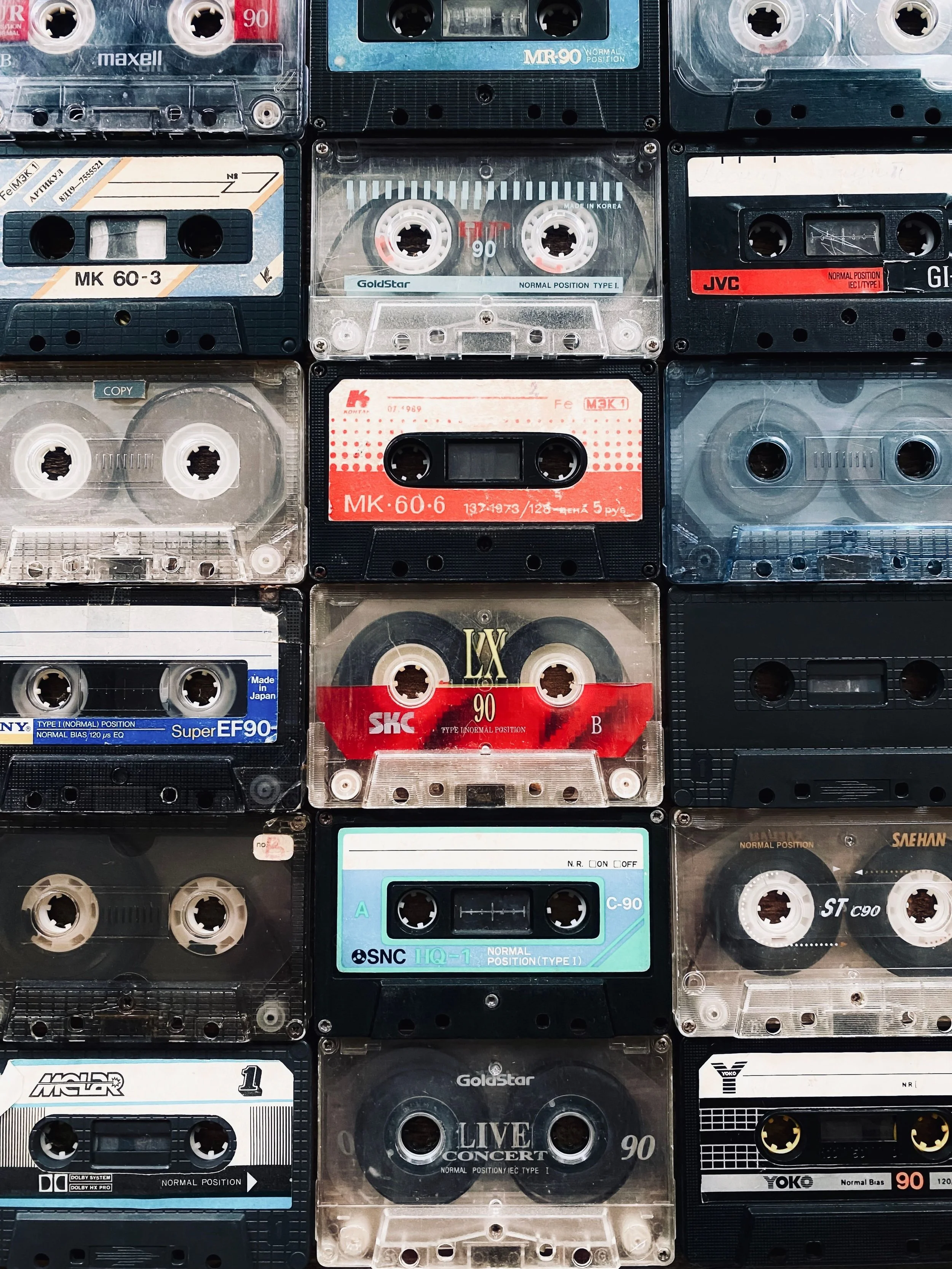
What happens to oral histories once they are made? How are we as a community preserving these incredible documentations of life, culture, and history? What is at risk of being lost with the deterioration and degradation of the physical carriers of oral histories?

These are not easy questions to ask our community, and there are no quick answers that come to mind. The unique and individual nature of oral history interviews makes any one-size-fits-all approach impossible. Oral histories at large state and national institutions have different preservation concerns than collections held by individuals or small community organisations. Born-digital interviews need digital preservation, while cassette tapes require digitisation as a first preservation step.

All collections need robust copyright and access permissions, particularly in this digital and online age. The preservation of oral histories can be difficult and time-consuming, is what I’m saying.

As project manager of the Precarious Oral Histories Project, part of the Language Data Commons of Australia at the Australian National University, I’m helping examine at-risk collections across Australia. We have quite a broad understanding of at-risk, precarious oral histories: precarious oral history collections are collections of interviews that may not have long-term support, funding, or preservation systems in place. They are at risk of being lost, becoming inaccessible, or not being properly managed in the future. If you’re unsure whether your collection will still be safe and accessible in 10, 20, or 50 years, you probably have precarious oral histories.

You might know me as Treasurer and Membership officer of Oral History NSW, or seen me at one of the events we hold to help community members develop and design oral history projects – often with an emphasis on the preservation of oral histories long-term. I’m very excited to be leading the Precarious Oral Histories Project, combining my experience working with small community heritage organisations with my expertise in archives.

Launched in 2025, the POHP first examined precarious oral history collections in Victoria, gathering information on just shy of 200 collections and identifying over 9,000 interviews at risk in the state. This immense community engagement created an incredible evidence base, highlighting the breadth of interviews across the state and delving into the conditions of the collections.
Many precarious oral history collections are held by community groups, researchers, volunteers, and local organisations with limited resources and no clear pathway for long-term preservation.

As part of Victorian project, a collection database was developed, listing all the collections submitted. Now with a facelift and an interface redesign, we’re proud to present the Precarious Oral Histories Catalogue, an online catalogue specifically for at-risk oral history collections. You can access the catalogue here. Currently, the catalogue only contains information regarding Victorian collections, but not for long!

The Precarious Oral Histories Project is now focusing on identifying oral history collections in NSW and the ACT, with the goal to expand across the country in 2027.

Tell us about your precarious oral history collection using the survey link before October 31!
By completing this survey, you can help ensure your collection is recognised and included in the Precarious Oral Histories Project’s public catalogue. The survey does not require you to upload interviews or transfer your collection. Instead, it gathers information that will help improve discoverability, inform future preservation initiatives, and strengthen advocacy for support for at-risk oral history collections.

There are two ways to complete the collection survey.
The first is using our online survey tool. This is a quick and efficient way of completing the survey. Your responses are saved automatically. You can leave the survey at any time and return later using the same browser and device to continue where you left off.
The second is to download the Word File of the survey. Here, you can manually complete the form and email this document back to our team at the Precarious Oral Histories Project.

If you have an oral history collection that’s held in NSW or the ACT, we would love to hear from you! You can read more about our project on our website here.

Dr Alexandra Mountain
Project Manager - Precarious Oral Histories Project

Winner of the 2025 Oral History NSW Community History Award: Our Stories - Albury Library Museum

Oral History NSW is pleased to award this year’s Community History Award to Albury LibraryMuseum for their project Our Stories. Please read on to find out more about this special work direct from the project team, and explore the interviews and stories further online.

We are deeply honoured to receive this award from Oral History NSW. Thank you to the committee for recognising this work. Oral history ensures that lived experiences are not lost, and we are proud to contribute to preserving these voices for future generations.

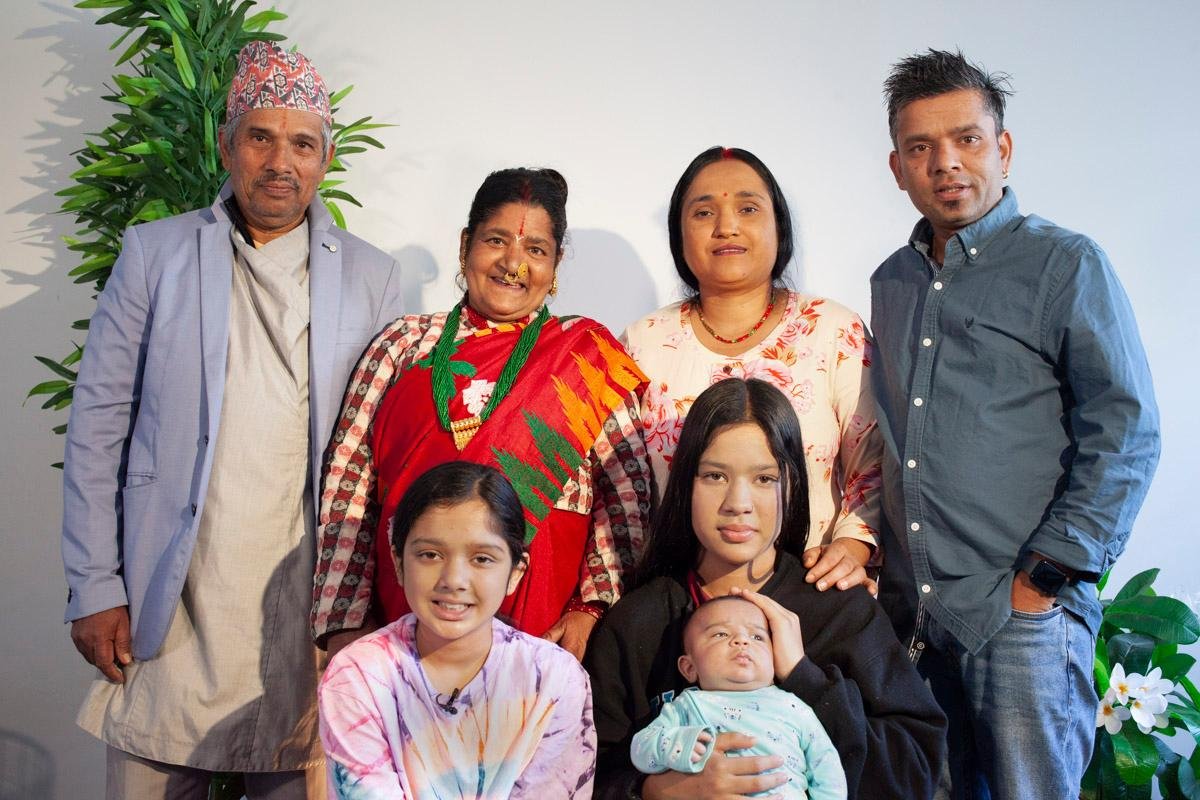
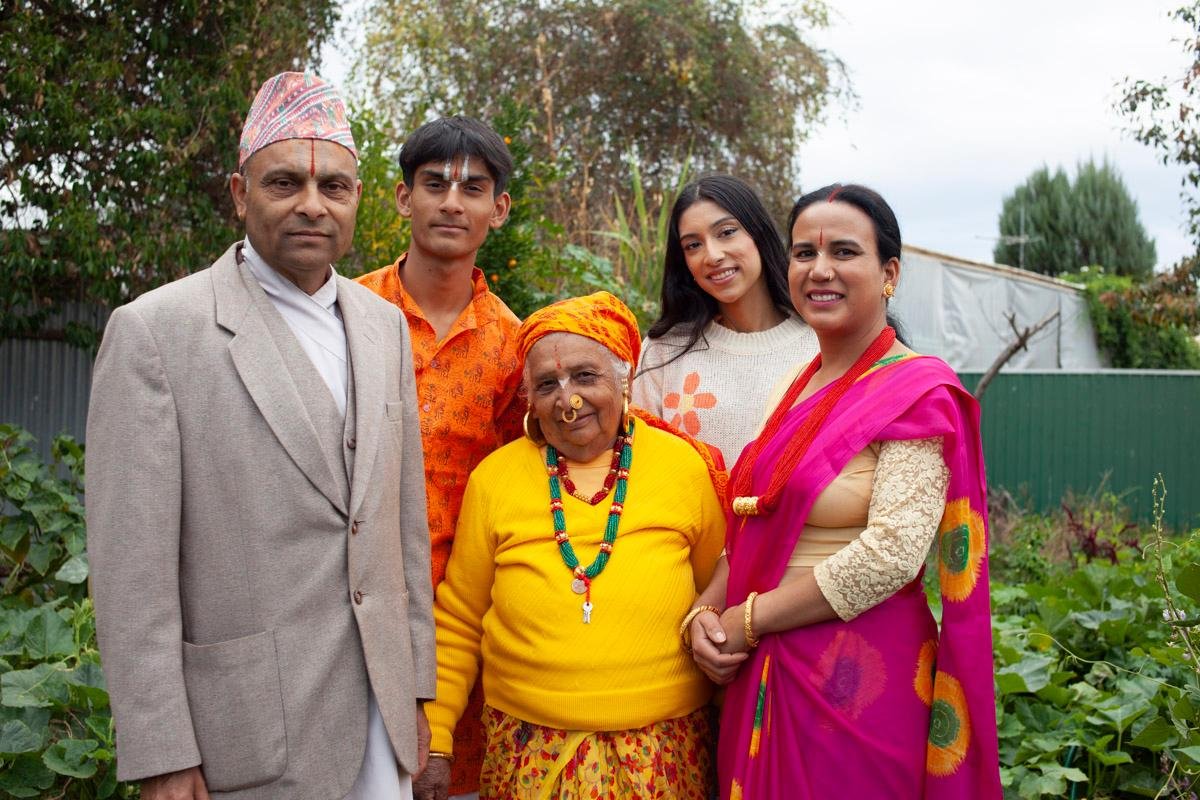
Our Stories was a community heritage project that collected oral history interviews and culminated in an exhibition at Albury LibraryMuseum from 7 September 2024 to 23 March 2025. In their own words, three generations of the Rimal and Sapkota families shared their experiences of migration as Nepali-speaking Bhutanese refugees.

The Rimal Family

The project aimed to document, interpret and celebrate Albury’s unique role as a major resettlement area for Nepali-speaking Bhutanese refugees in Australia. The exhibition featured oral histories, photography, personal objects and documentary films in an open and heartfelt exploration of the remarkable journeys, culture and achievements of two families that now call Albury home. Digital access to the exhibition and interviews continues online.

Major outputs included:

  • Eight oral histories with transcripts and translations

  • Three documentary films subtitled in English and Nepali

  • Twenty-eight photographs

  • An exhibition website

  • Cataloguing of oral histories, films, photographs and objects into the Museum and Social History Collection

The AlburyCity Museum and Social History Collection tells the stories of Albury and its region through over 34,000 items, including images, objects, documents and audio-visual material. While the collection has strong representation of First Nations histories, colonial settlement, Chinese, Lebanese and German migration, and post-WWII European migration, more recent migration stories were identified as a priority for development. Since the 2000s, Albury has become a Regional Settlement Hub for families from the Democratic Republic of the Congo, Nepal, Bhutan and Sudan.

The Sapkota Family

Albury, a major regional city on the NSW side of the Murray River, has a population of around 56,000. Since 2009, it has become one of the largest resettlement areas for Nepali-speaking Bhutanese refugees in regional Australia. According to the 2021 Census, Nepali is the most spoken language at home in the AlburyCity LGA other than English.

The LibraryMuseum has long-standing connections with the Nepali-speaking Bhutanese community through outreach programs, including a partnership with the Albury-Wodonga Volunteer Resource Bureau since 2015 to support Bhutanese seniors. Conserving the stories of the elder generation was becoming increasingly urgent, and we were fortunate to interview three generations of each family, capturing their unique migration experiences and hopes for the future.

The 2023 NSW Heritage Grant provided essential funding. We began by hosting a meet-and-greet evening at the LibraryMuseum, offering a translated tour and inviting families to participate. External contractors included a professional oral historian, filmmaker, designer and translator, supported by LibraryMuseum staff:

  • Sara Korman (Coordinator Learning & Outreach) – assisted with interviews

  • Narelle Drewe (Learning & Outreach Officer) – built strong community links

  • Sandra Endresz (Museum Collections Officer) – provided curatorial support

Interviews were conducted in family homes, with transcripts reviewed by participants.
Exhibition themes included: Beginnings: Life in Bhutan; Displacement: Leaving Bhutan; An Uncertain Future: Refugee Camps; A New Home: Arrival in Australia; Looking Forward: Plans for the Future. Accessibility was a priority: Nepali text featured in titles and labels, films were subtitled, and a PenFriend3 Audio Labeller enabled oral content playback in Nepali.

Community involvement extended to exhibition installation, where Bhutanese participants dressed a mannequin in a traditional sari, now part of the collection. After the physical exhibition closed, an online version was launched featuring oral histories, films, theme panels and a 3D walkthrough. Some material also informed the redevelopment of the Collection Gallery exhibition Bungambrawatha: Stories of Albury, which opened in July 2025.

Explore the online exhibition here:
https://www.alburycity.nsw.gov.au/leisure/museum-and-libraries/exhibitions/past/our-stories


Acknowledgements:

This project was made possible through the generosity of the Rimal and Sapkota families who have shared their experiences, homes, objects and images as part of this project.

This project was proudly supported by the NSW State Government.

Additional funding and in-kind support were provided by AlburyCity.

The exhibition was developed and project managed by the Albury LibraryMuseum with the generous support of the Albury Wodonga Volunteer Resource Bureau.

The films featured in this exhibition were created by Helen Newman of Nomad Films. The oral histories and photographs were captured by Featherweight Projects. Graphic design services were provided by Julia Fin of Fin Design. Translation services were provided by Kedar Sapkota.

2025 Annual General Meeting - Oral History NSW Inc

Thank you to everyone who joined us for our recent AGM in September.
It was a great opportunity to reflect on the achievements of Oral History NSW over the past year and acknowledge the dedication of our committee and valued members who continue to inspire and champion oral history across NSW and the ACT.

We’re excited to soon announce the winner of our annual Community History Award and share updates on upcoming grants and funding opportunities for the year ahead. Stay tuned!

The following were elected at the AGM on 25 September 2025:

  • President — Maria Savvidis

  • Vice-President — Scott McKinnon

  • Treasurer — Alexandra Mountain

  • Secretary — Laura Anderson

  • Public Officer — Eureka Henrich

  • Committee Member — Kathy Kallos

  • Committee Member — Emma Ramsay

  • Committee Member — Margaret Leask


You can read the President’s Report here.

IT REALLY IS ALL GREEK TO US!

PRESERVING LANGUAGE, CULTURE AND IDENTITY THROUGH ORAL HISTORIES

Kathy Kallos is a committee member of Oral History NSW and an oral historian working in english and greek languages.

As a child of first-generation Greek migrants to Australia, I’d been exposed to my parent’s mother tongue since birth. Growing up in the 70’s in Sydney’s inner west, it was the norm to speak Greek at home and compulsory to attend Greek afternoon school several times a week. We were a generation shaped by our cultural background, bearing witness to the challenges our post-World War II migrant parents faced in settling in their new country. 

I had the privilege of conducting oral history interviews in both Greek and English for the Greek Australian Archive project, a collaboration involving the University of NSW, the State Library of NSW, the Greek Orthodox community of NSW and the Australian Research Council. The Archive consists of over seventy oral histories with Greek migrants who arrived in Sydney between 1949 and 1972. Excerpts, transcripts and translations are now featured on the State Library website. The personal photographs which accompany the oral histories provide a powerful adjunct to the spoken word. 

By virtue of my own cultural and linguistic background, I was able to develop a rapport with my interviewee subjects quickly, enabling a comfortable and trusting relationship. In the pre-interview phase, I met face-to-face with as many interviewees as possible and took the opportunity to look at photographs to engage with the past and to begin the process of storytelling. For some, this was emotionally triggering and needed sensitive handling. Likewise, some interviewees were emotional when recounting difficult and traumatic experiences during the oral history recording and this needed to be dealt with sensitivity and respect. In some cases, I paused the recording deferring to the interviewees wishes.

Interviewees provided detailed accounts of their early years in Greece and what it was like living through the Second World War and the nation’s Civil war. It was deeply moving to listen to the circumstances surrounding their departure and the courage and resilience demonstrated in finding employment, adopting workplace practices and building new lives on the other side of the world. 

The recorded narratives provide useful details about the day-to-day challenges of integration, broadening further the existing record of Australia’s migration history. They illustrate how peoples’ experiences are shaped during historical periods in a way that cannot be captured in books or other secondary sources. First-hand accounts are intimate, immediate and powerful.

The preference for many interviewees was to speak in Greek. In telling their stories in the Greek language, many of the interviewees felt they had the scope to express themselves more freely and comfortably. It meant the project team captured significant narratives that otherwise would never have made it into the public domain. 

With more than half the interviews conducted in Greek, the archive has preserved a language, replete with accents, regional dialects, linguistic and cultural nuances from the various regions of Greece. The recorded narratives by these first-generation immigrants who’ve brought language onto our shores directly from the country of origin, can only gain further historical, cultural and linguistic value as time moves on. 

All languages from culturally and linguistically diverse communities are in danger of falling silent as people grow old and die. Studies by linguists and anthropologists indicate inevitable erosion of language and even eventual extinction. Let’s hope we’re a long way from that! But time is certainly of the essence when it comes to post-war first-generation immigrants!

We need to keep seeking opportunities in our libraries, museums, schools and institutions to preserve the spoken word from all culturally and linguistically diverse communities in Australia, both newly arrived and those more established. More people from CALD communities with lived experience of migration and the appropriate language skills need to be encouraged through government and community networks to engage with the practise of oral history, to preserve language and the rich stories which make up the fabric of Australian society.

- Kathy Kallos, September 2025

Explore more oral histories on the Greek-Australian Archive website - here.

Working as a Freelance Historian and/or Oral Historian in NSW - panel discussion 3 March 2025

The Professional Historians Association and Oral History NSW recently co-presented a panel discussion, Working as a Freelance Historian and/or Oral Historian in NSW at History House in Sydney.

Chaired by PHA NSW-ACT President and freelance historian Dr Naomi Parry-Duncan, panel members were Dr Martina Mueller, a professional historian working in Sydney’s heritage sector; Dr Paul Irish of Coast History & Heritage an archaeological consultant specialising in Aboriginal Heritage; and Dr Margaret Leask, a freelance oral historian focussing on the performing arts who has been researching and recording oral histories for libraries and archives for twenty years.

Focusing on the practicalities, joys and challenges of working as a freelance historian, this was a terrific opportunity to appreciate the great value of connecting with others who work in the freelance environment and are active members of organisations that encourage and support our work. We often, as historians, work alone, and there are many practical issues to deal with: acquiring an ABN as a Sole Trader, finding and bidding for work, quoting realistic and ‘competitive’ fees, insurance, ethical issues, self-promotion and a website presence and, for oral historians, acquiring and using appropriate recording equipment and understanding permission and copyright agreements in relation to both the interviewee and the receiving organisation.

This last issue was raised and further discussed during the question time at the end. It was agreed that both PHA and OHA (their state and national organisations), provide excellent on-line information, resources, events, registers of practitioners and fee guidelines as well as organising face to face Conferences and training opportunities. The panel recognised the value of collaborating with other historians and seeking mentoring help rather than feeling competitive, and all agreed that when starting out as a freelance historian, the best way to initiate research or oral history projects was by focussing on one’s own interests, experience, knowledge and particular enthusiasms.

In this way it is possible to identify upcoming significant events, anniversaries and milestones in relation to organisations and people and to offer research into the past and perhaps interviews with people involved. Of course, there are also significant events such as bushfires, covid, floods and other traumatic events that need to be documented and shared.

Consideration was given to how our work has changed in the digital age. Inevitably most of our administration work is done by e-mail, and many of us use teams or zoom for meetings. When Covid reduced working together face to face, I recorded, very reluctantly, some oral history interviews by zoom. However, I guess there can no better example of the joy of sharing interests and networking in the room than the pre drinks, nibbles and conversation we shared before the panel kicked off. While I was delighted people could join the session on-line, the smiling, responsive faces in the room were very encouraging!

As historians we are all trying to get the story and people behind or beyond the facts and often the journey takes us to unexpected places, particularly with oral history interviews. As historians, research and making connections is in our DNA. Those working on tangible research material discover some of the facts along the way whereas perhaps oral historians need to know many more facts, to prompt memories, before they go for the story/interview, so make sure you do your research.

This brings me to a shout out for Richard Flanagan’s wonderful recent book Question 7 (Penguin Books 2024), which he describes as ‘an account of memory, not fact, and facts are not how we know ourselves, while memory - its tricks, its evasions, its silences, its inventions, its inevitable questions - is who we become as we shuffle around in a circle…’ (Page 151). Read it and be awed by his story telling in this blend of dream, family history, place (Tasmania) and memory.

Written by Margaret Leask

OH NSW Conference Grant: Listening Geographies: the risks and possibilities of recording oral history in a ‘place’ - Port Kembla.

Congratulations to Jennifer Macey who was awarded one of our two conference award grants for presenters attending the Biennial Oral History Australia Conference in person. We warmly encourage you to read more below about Jennifer’s work in oral history and her personal experience of attending the conference.


I am a journalist by trade and for the past 25 years I’ve been interviewing everyone from Presidents to pig farmers to kids to Nazi resistance fighters. Interviewing is my bricks and mortar, so the switch to Oral History should be a simple progression. Yet Oral History still feels to me like the Holy Grail of interviewing. It’s longer, it’s more detailed, it’s more intimate. If done right, an oral history can unearth some sparkly new piece of history. But am I doing it right?

So it was with great excitement and a great honour that I was granted a student scholarship from Oral History NSW to attend my first Oral History Australia Biennial Conference in November, 2024 in Naarm Melbourne to listen and learn from Australia’s finest.

My PhD project is an oral history podcast interviewing people living and working in Port Kembla. Yet I struggle with the tension between interviewing for facts, to plug narrative holes, to create imagery with the art of allowing someone to simply tell their life story. Alessandro Portelli’s keynote was surprisingly gentle yet profound and seemed to speak directly to my concerns. He challenged us to not to ask too many questions but “just (be) there to listen”.

It was almost impossible to choose from all of the enticing sessions so I sought out those panels discussing either podcasting or a ‘place’. First up: Rivers, Emotions and Environmental Change: Voices from the Murray Darling Basin. Margaret Cook outlined the tricks she uses to draw out reticent farmers (a packet of biscuits among others). Katie Holmes described how people discussed climate change “in the place where it was happening”.

Karen Twigg showcased the online StoryMaps making the interviews accessible to the community. My notebook filled up with ideas and possibilities for my own research. Emma-Jean Kelly, from Aotearoa New Zealand talked about how best to translate the Maori language in a culturally sensitive way for her podcast Te Rauparaha: Kei Wareware. Alexandra Pierce turned her vast oral history collection of women protesting against the Vietnam War into a podcast what a feat!
Daniel Bacchieri interviewed buskers from Melbourne’s Bourke St Mall about how they survived the COVID lockdowns. Louise Whelan interviewed AND took stunning photographic portraits of women working in Australia’s Space Industry.

As a baby academic doing interdisciplinary research in Geography, Podcasting and Oral History I tried to incorporate the idea of ‘place’ into the conference theme, Risks, Rewards & Possibilities of Oral History. I posed the question, “What are the risks and rewards of where we record the oral history interview?” What are the risks of recording inside the Port Kembla steelworks (it’s very loud!) Is it better to record inside a radio studio or in someone’s home? If people feel too comfortable are they more willing to divulge intimate details of their life at risk to their own privacy or trauma? There was a thoughtful back and forth in question time and then my first ever presentation was over.

I could finally relax and listen to the incredible Commissioners from the Yoorrook Justice Commission – talking about their important work collecting oral history testimonials about the effects of colonisation and dispossession on Victoria’s first peoples. I sat in awe.

At the final night dinner I looked around the room at the collection of oral historians, it was like having dinner in a library but with living, breathing books sitting at the table. Thank you to Oral History NSW for the bursary which enabled me to travel to Melbourne to attend the 2024 Oral History of Australia Biennial Conference, it has stretched me in ways unimaginable.

Have you joined the Oral History NSW Register of Oral History Practitioners?

A reminder that Oral History NSW offers a register of members available for different aspects of oral history work - this is a great way for people to find experienced practitioners and put your name out there!

If you are a current financial member of Oral History NSW (which also includes the ACT!) and have experience in conducting oral history projects and would like to be included on the register (interviewers, transcriptionists, whatever your area of expertise) please fill in the form today.

We advise those using the register that Oral History NSW does not endorse any particular practitioner and it is their responsibility to contact individuals directly to seek further information.

OH NSW Conference Grant: Capturing Spiritual and Cultural Heritage - The Nan Tien Temple's 30th Anniversary Oral History Project

Congratulations to Venerable Jue Fang who was awarded one of our two conference award grants for presenters attending the Biennial Oral History Australia Conference in person. We warmly encourage you to read more below about this oral history project and the personal experience of attending the conference.


Venerable Jue Fang introducing the Nan Tien Temple oral history project at the OHA conference.

Capturing Spiritual and Cultural Heritage: The Nan Tien Temple's 30th Anniversary Oral History Project
By Venerable Jue Fang

Receiving the 2024 Oral History NSW Conference Grant was an honour and a privilege that allowed me to attend the Oral History Australia Biennial Conference in Melbourne this November. The conference theme, The Power of Oral History—Risks, Rewards and Possibilities, provided a powerful lens through which I could reflect on the journey of preserving Nan Tien Temple's legacy through our 30th Anniversary Oral History Project.

Nan Tien Temple, also known as the "Paradise of the South," emerged from our founder Venerable Master Hsing Yun's vow: "May peace and happiness pervade all worlds." Over the past 30 years, it has grown from a barren hill into a sanctuary of spirituality, education, and cultural exchange. As the project manager for this oral history initiative, I felt a profound sense of responsibility to capture and preserve the lived experiences of those who contributed to this transformation.

Interview with David Campbell, former Lord Mayor of Wollongong.

Presenting our project at the conference was an opportunity to share how we embarked on this journey. With no prior experience, we started from scratch, attending training sessions, consulting experts, and collaborating closely with the State Library of NSW. Establishing digital archives became a central focus, ensuring that interviews and historical documents would be preserved and accessible for future generations.

One of the most moving parts of our project has been conducting interviews with those who lived this history. Hearing their stories- filled with emotion, sincerity, and wisdom - has been transformative. For example, David Campbell, the former Lord Mayor of Wollongong, spoke about the temple's founding as a bold "gamble" that ultimately enriched the community and temple alike. His heartfelt reflections encapsulated the essence of oral history: preserving not just facts but the human connections and emotions that bring history to life.

The conference was also a chance to learn from others in the field. I was particularly inspired by the panel discussion, Oral History in Our National and State and Territory Libraries, which highlighted the challenges and responsibilities of archiving oral histories on a national scale. The session resonated deeply, affirming that our work at Nan Tien Temple aligns with broader efforts to conserve and share community narratives.

As a monastic and an insider of the temple community, this experience has deepened my belief in the transformative power of oral history. It is more than a method of preservation; it is a bridge connecting generations, fostering understanding, and celebrating the resilience of the human spirit.
I hope that more communities will join in this meaningful endeavour, capturing their own stories to create a tapestry of voices that will inspire and inform the future.

I return from this conference with gratitude and renewed resolve to continue our project. Thevoices we preserve today are the seeds of tomorrow's wisdom, ensuring that our shared heritage remains a source of hope and connection for generations to come.

Official celebrations to mark Nan Tien Temple 30th anniversary, 22 September 2024.

2024 Annual General Meeting - Oral History NSW Inc

Thank you to everyone who attended our AGM recently in October.
It was a welcome opportunity to review Oral History NSW’s activities in the past year as well as look ahead to our future plans for 2025.

At the AGM we announced the winners of our two conference grants for presenters
attending the Biennial Oral History Australia Conference in person:  

  • Jennifer Macey: Jennifer is a Phd candidate at the university of Wollongong and her presentation is titled “Listening Geographies–the risks and possibilities of recording oral history in a ‘place” looking at podcasting as a potential methodology for oral history

  • Venerable Jue Fang: Nan Tien Temple's 30th Anniversary Oral History Project – the project looks to preserve the spiritual, cultural, and historical legacy of one of the Southern Hemisphere's largest Buddhist temples Nan Tien located in Wollongong.

We look forward to hearing more from our award recipients in 2025 about their experiences attending and presenting at the conference!

The following were elected at the AGM on 30 October 2024:

  • President — Maria Savvidis

  • Vice-President — Scott McKinnon

  • Treasurer — Alexandra Mountain

  • Secretary — Laura Anderson

  • Public Officer — Eureka Henrich

  • Committee Member — Kathy Kallos

  • Committee Member — Emma Ramsay

  • Committee Member — Margaret Leask

The committee would also like to sincerely thank outgoing long term committee member and former Treasurer Andrew Host for his passion, enthusiasm and support of Oral History NSW and its members over many years.

You can read the President’s Report here.